
How Inflation Affects Mortgage Rates
When you read about the housing market in the news, you might see something about a recent decision made by the Federal Reserve (the Fed). But how does this decision affect you and your plans to buy a home? Here’s what you need to know.
The Fed is trying hard to reduce inflation. And even though there’s been 12 straight months where inflation has cooled (see graph below), the most recent data shows it’s still higher than the Fed’s target of 2%:
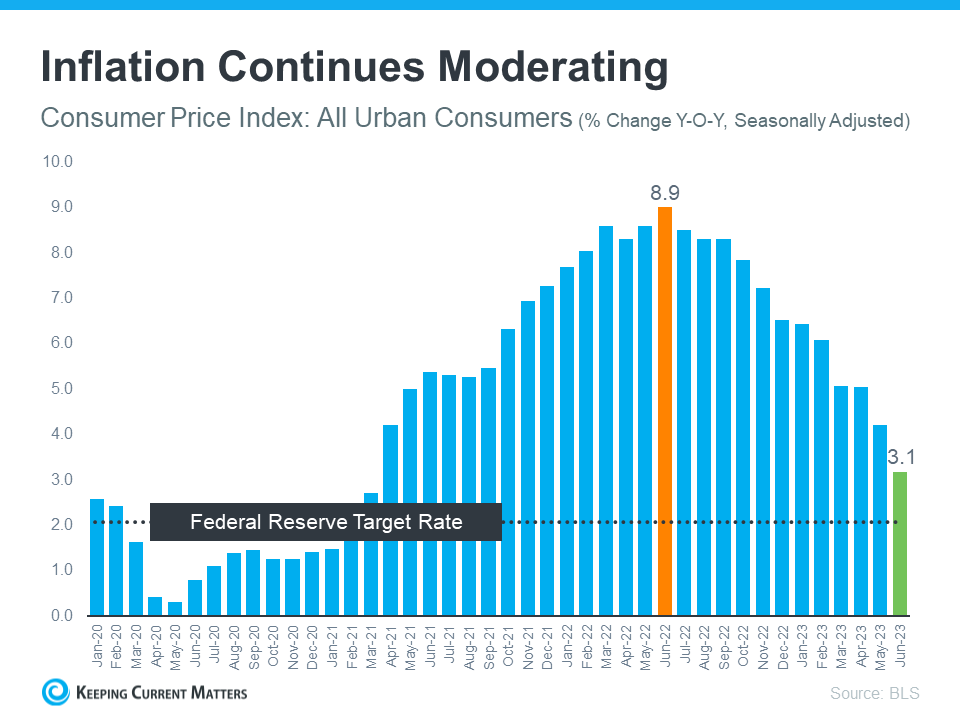
While you may have been hoping the Fed would stop their hikes since they’re making progress on their goal of bringing down inflation, they don’t want to stop too soon, and risk inflation climbing back up as a result. Because of this, the Fed decided to increase the Federal Funds Rate again last week. As Jerome Powell, Chairman of the Fed, says:
“We remain committed to bringing inflation back to our 2 percent goal and to keeping longer-term inflation expectations well anchored.”
Greg McBride, Senior VP, and Chief Financial Analyst at Bankrate, explains how high inflation and a strong economy play into the Fed’s recent decision:
“Inflation remains stubbornly high. The economy has been remarkably resilient, the labor market is still robust, but that may be contributing to the stubbornly high inflation. So, Fed has to pump the brakes a bit more.”
Even though a Federal Fund Rate hike by the Fed doesn’t directly dictate what happens with mortgage rates, it does have an impact. As a recent article from Fortune says:
“The federal funds rate is an interest rate that banks charge other banks when they lend one another money . . . When inflation is running high, the Fed will increase rates to increase the cost of borrowing and slow down the economy. When it’s too low, they’ll lower rates to stimulate the economy and get things moving again.”
How All of This Affects You
In the simplest sense, when inflation is high, mortgage rates are also high. But, if the Fed succeeds in bringing down inflation, it could ultimately lead to lower mortgage rates, making it more affordable for you to buy a home.
This graph helps illustrate that point by showing that when inflation decreases, mortgage rates typically go down, too (see graph below):
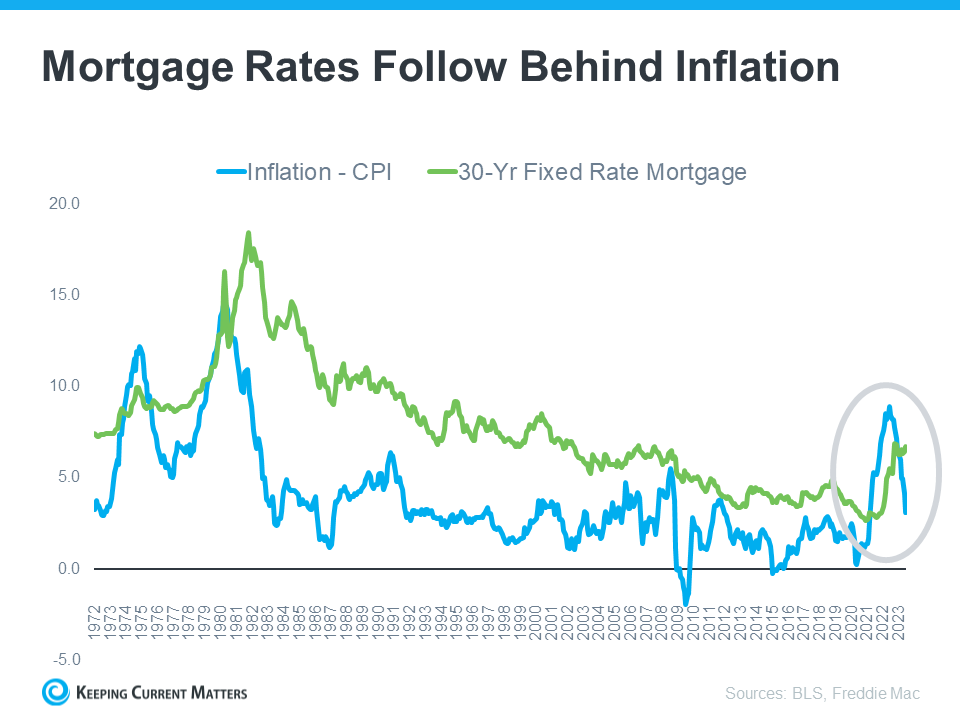
As the data above shows, inflation (shown in the blue trend line) is slowly coming down and, based on historical trends, mortgage rates (shown in the green trend line) are likely to follow. McBride says this about the future of mortgage rates:
“With the backdrop of easing inflation pressures, we should see more consistent declines in mortgage rates as the year progresses, particularly if the economy and labor market slow noticeably.”
Bottom Line
In the ever-fluctuating landscape of real estate and mortgage rates, staying informed is key to making sound decisions for your future. As we've discussed, the ebb and flow of mortgage rates is closely tied to the intricate dance of inflation. Should inflation take a breather, mortgage rates are likely to follow suit and head southward.
In your journey through the world of real estate, having a reliable partner by your side is invaluable. That's where Mountain Rose Realty comes into play, your steadfast beacon of guidance in the realm of Telluride real estate. With a finger on the pulse of market dynamics, especially in the picturesque Telluride region, the Anne-Britt led team is committed to offering you a compass through these dynamic market changes.
If you're on the hunt for Telluride homes for sale or exploring homes for sale in Telluride, CO, tapping into the insights of knowledgeable professionals like those at Mountain Rose Realty is a strategic step. In a world where change is constant, their expert advice can help you navigate the shifts, whether it's about mortgage rates, market trends, or housing dynamics.
Remember, your journey towards homeownership or real estate investment doesn't have to be a solo expedition. Rely on the expertise of a trusted real estate professional who not only understands the market but also prioritizes your unique goals and aspirations. Mountain Rose Realty stands ready to be your partner on this exciting journey, making the path to your dream property in Telluride a reality.
Frequently Asked Questions
- How does the Federal Reserve's interest rate decision affect mortgage rates?
- While the Federal Funds Rate doesn't directly dictate mortgage rates, it has a meaningful impact. When the Fed raises rates to combat inflation, it increases the cost of borrowing across the economy, which typically pushes mortgage rates higher. Conversely, as inflation cools and the Fed stops hiking, mortgage rates tend to decline over time.
- What is the Federal Reserve's inflation target, and why does it matter for homebuyers?
- The Fed targets 2% inflation. When inflation runs higher than this goal—as it was in August 2023—the Fed raises interest rates to slow borrowing and cool the economy. For homebuyers, this means higher mortgage rates in the near term, but if the Fed succeeds in bringing inflation down to 2%, mortgage rates are likely to fall, making home purchases more affordable.
- Based on historical trends, what should homebuyers expect for mortgage rates if inflation continues to decline?
- Historical data shows that when inflation decreases, mortgage rates typically follow suit. According to the post's analysis, as inflation gradually comes down, mortgage rates are expected to decline more consistently, particularly if the economy and labor market slow noticeably as the year progresses.
- Why didn't the Federal Reserve stop raising rates even though inflation had cooled for 12 consecutive months?
- Although inflation showed 12 months of cooling, it remained stubbornly higher than the Fed's 2% target. The Fed wanted to avoid stopping too soon and risking inflation climbing back up, so they continued with rate hikes to ensure they achieved their goal of bringing inflation back down to 2%.